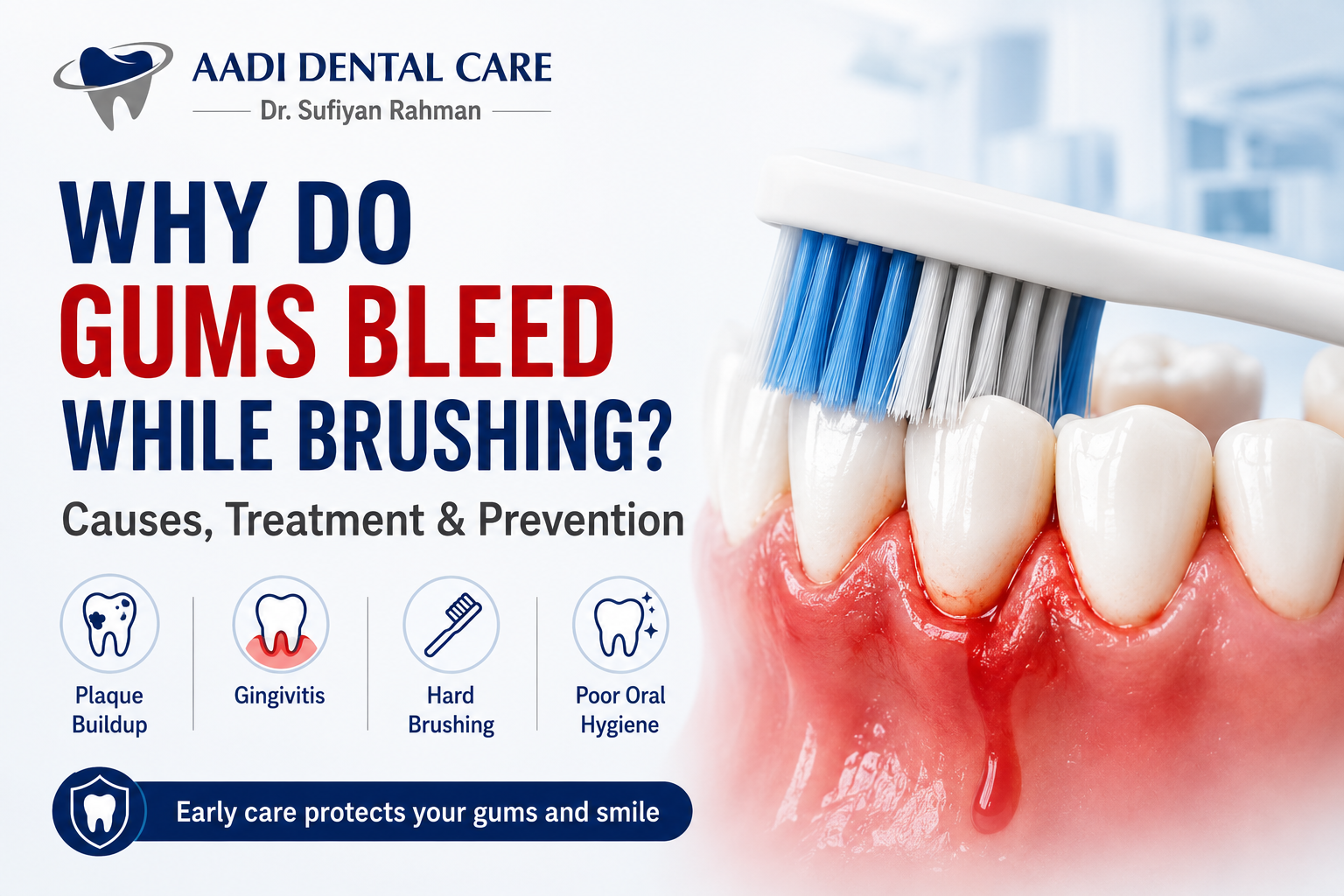
Why Do Gums Bleed While Brushing? Causes, Treatment & Prevention
Bleeding gums while brushing can feel worrying, especially when you see blood on your toothbrush or while rinsing your mouth. Many people ignore it, thinking it is normal, but healthy gums should not bleed during regular brushing.
Gum bleeding is often an early sign that your gums are irritated, inflamed, or affected by plaque buildup. In some cases, it may also be linked to brushing too hard, poor oral hygiene, gum disease, vitamin deficiency, hormonal changes, or certain medical conditions.
The good news is that bleeding gums can often be treated when the cause is found early.
Quick Answer: Why Do Gums Bleed While Brushing?
Gums usually bleed while brushing because bacteria and plaque collect around the gumline. This irritates the gums and may cause swelling, redness, tenderness, and bleeding.
The most common dental reason is gingivitis, which is the early stage of gum disease. If treated on time with proper brushing, flossing, professional cleaning, and regular dental checkups, gum health can improve and future complications can be prevented.
Common Causes of Bleeding Gums
1. Plaque Buildup Around the Gumline
Plaque is a sticky layer of bacteria that forms on the teeth. When plaque is not cleaned properly, it collects near the gumline and irritates the gums.
This irritation can make the gums red, swollen, and sensitive. As a result, they may bleed while brushing or flossing.
If plaque remains for a long time, it can harden into tartar. Tartar cannot be removed with normal brushing and usually requires professional dental cleaning.
2. Gingivitis
Gingivitis is one of the most common causes of bleeding gums. It is the early stage of gum disease and usually happens because of plaque buildup and poor oral hygiene.
Common signs of gingivitis include:
- Bleeding while brushing or flossing
- Red or swollen gums
- Tender gums
- Bad breath
- Gum sensitivity
- Mild discomfort around the gumline
Gingivitis should not be ignored because untreated gum disease can slowly progress and affect the tissues that support the teeth.
3. Brushing Too Hard
Many people think brushing hard will clean teeth better, but this can damage the gums. Using too much pressure or a hard-bristled toothbrush can cause gum injury and bleeding.
A soft-bristled toothbrush with gentle circular movements is safer and more effective for daily cleaning.
4. Not Flossing Regularly
If you do not floss regularly and suddenly start flossing, your gums may bleed for a few days. This can happen because plaque and bacteria are present between the teeth and the gums are already irritated.
With gentle and regular flossing, bleeding usually reduces as the gums become healthier.
5. Poor Oral Hygiene
Skipping brushing, avoiding flossing, or delaying dental visits can allow bacteria to grow. This increases the chances of plaque buildup, bad breath, gum swelling, cavities, and gum bleeding.
Good oral hygiene is one of the simplest ways to protect both teeth and gums.
6. Hormonal Changes
Hormonal changes during pregnancy, puberty, or certain life stages can make gums more sensitive. This may increase the chances of gum swelling or bleeding while brushing.
During these times, regular dental checkups and proper oral care become even more important.
7. Vitamin Deficiency
A lack of important nutrients, especially vitamin C and vitamin K, may affect gum health. Weak or sensitive gums can bleed more easily.
A balanced diet with fruits, vegetables, and proper nutrition supports healthy gums and overall oral health.
8. Certain Medical Conditions or Medicines
Sometimes, bleeding gums may be linked to diabetes, blood-related conditions, or medicines such as blood thinners. If gum bleeding happens frequently or does not improve, it is important to consult a dentist for proper evaluation.
Symptoms You Should Not Ignore
Bleeding gums can be an early warning sign. You should pay attention if you also notice:
- Swollen gums
- Red or dark gums
- Bad breath
- Pain while chewing
- Gum sensitivity
- Loose teeth
- Receding gums
- Pus around the gums
- Bleeding that happens often
These signs may indicate gum infection or advanced gum disease and should be checked by a dentist.
When Should You Visit a Dentist?
You should visit a dentist if your gums bleed regularly while brushing or flossing. Occasional bleeding due to hard brushing may improve with better technique, but repeated bleeding needs attention.
Visit a dentist if:
- Bleeding continues for more than a few days
- Gums are swollen, painful, or red
- You have persistent bad breath
- Your teeth feel loose
- You notice gum recession
- You have sensitivity along with bleeding
- Bleeding happens even without brushing
Early dental care can prevent small gum problems from becoming serious.
Treatment for Bleeding Gums
Treatment depends on the reason behind the bleeding. A dentist will examine your teeth, gums, plaque buildup, and oral hygiene before suggesting the right treatment.
1. Professional Dental Cleaning
Professional dental cleaning helps remove plaque and tartar from the teeth and gumline. This is one of the most effective treatments for gum bleeding caused by plaque buildup or gingivitis.
2. Scaling and Deep Cleaning
If tartar is present below the gumline, the dentist may recommend scaling or deep cleaning. This helps clean areas where a toothbrush cannot reach.
3. Improved Brushing Technique
Your dentist may guide you on how to brush correctly. A soft-bristled toothbrush, gentle pressure, and proper brushing angle can reduce gum injury and bleeding.
4. Flossing and Interdental Cleaning
Cleaning between the teeth removes food particles and plaque from areas that brushing alone cannot clean. This helps reduce gum irritation and improves gum health.
5. Gum Care Treatment
If gum disease has progressed, the dentist may suggest specialized gum treatment based on your condition. Early treatment can help protect your natural teeth and prevent further damage.
6. Mouthwash Recommendation
In some cases, your dentist may recommend a suitable mouthwash to reduce bacteria and support gum healing. Avoid using strong mouthwash without dental advice if your gums are already sensitive.
How to Prevent Bleeding Gums
Bleeding gums can often be prevented with a consistent oral care routine and regular dental visits.
Brush Twice a Day
Brush your teeth twice daily using a soft-bristled toothbrush and fluoride toothpaste. Do not brush aggressively.
Floss Daily
Flossing once a day helps remove plaque and food particles from between teeth. Be gentle and consistent.
Visit Your Dentist Regularly
Regular dental checkups help detect gum problems early. Professional cleaning also prevents tartar buildup.
Eat a Healthy Diet
Include fruits, vegetables, and nutrient-rich foods in your diet. Limit sugary snacks and drinks because they can increase plaque formation.
Replace Your Toothbrush Regularly
Change your toothbrush every 3 months or earlier if the bristles are worn out. Worn bristles do not clean properly and may irritate the gums.
Do Not Ignore Early Signs
Bleeding gums, swelling, bad breath, and sensitivity are warning signs. Treating them early can help prevent infection, gum disease, and tooth loss.
FAQs About Bleeding Gums
Is bleeding from gums while brushing normal?
No. Healthy gums should not bleed during regular brushing. If your gums bleed often, it may be a sign of plaque buildup, gingivitis, or gum irritation.
Should I stop brushing if my gums bleed?
No. You should not stop brushing. Instead, use a soft-bristled toothbrush and brush gently. Stopping brushing can allow more plaque to build up.
Can bleeding gums heal on their own?
Mild bleeding caused by hard brushing or irregular flossing may improve with better oral care. But if bleeding continues, a dental checkup is important.
What is the fastest way to stop bleeding gums?
The best way is to find the cause. Proper brushing, flossing, professional dental cleaning, and dentist-recommended care can help control gum bleeding.
Can bleeding gums cause tooth loss?
If bleeding gums are due to untreated gum disease, the condition may progress and affect the tissues supporting the teeth. Early treatment helps prevent serious damage.
Which toothbrush is best for bleeding gums?
A soft-bristled toothbrush is usually best for sensitive or bleeding gums. Brush gently and avoid applying too much pressure.
Final Thoughts
Bleeding gums while brushing should never be ignored. It may be an early sign of plaque buildup, gingivitis, gum infection, or improper brushing technique.
With timely dental care, professional cleaning, and a proper oral hygiene routine, gum problems can often be treated before they become serious.
Book Your Gum Health Checkup Today
Bleeding gums are your mouth’s way of saying something needs attention. Early diagnosis can help prevent gum infection, tooth sensitivity, bad breath, and future dental complications.
At Aadi Dental Care, we provide expert dental checkups, professional cleaning, and personalized gum care treatments to protect your smile.
Noticed bleeding while brushing? Book your consultation today and take the first step toward healthier gums.