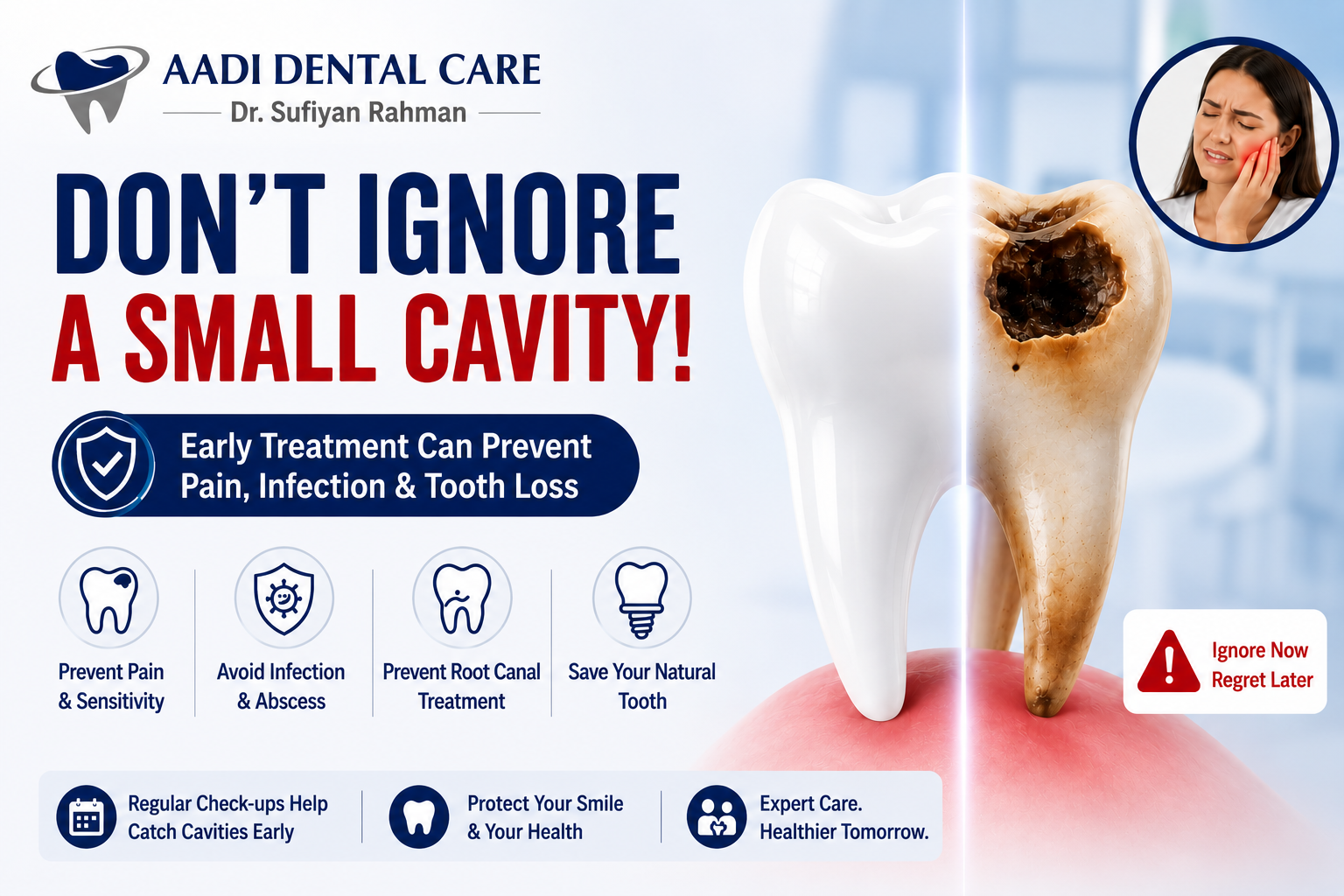
The Hidden Dangers of Delaying a Small Cavity: Why Early Treatment Matters
Most people don't think much about a small cavity, especially when it isn't causing pain. It's easy to assume that if a tooth doesn't hurt, the problem isn't serious. However, this is one of the most common misconceptions in dental health.
A small cavity may seem harmless today, but tooth decay is a progressive condition that doesn't stop on its own. What begins as a tiny area of damage can eventually lead to severe pain, infection, expensive treatments, and even tooth loss if left untreated.
Understanding the risks of delaying treatment can help you protect your oral health and avoid unnecessary dental complications.
What Is a Dental Cavity?
A dental cavity is a permanently damaged area in the tooth caused by bacterial activity. When food particles, especially sugars and starches, remain on the teeth, bacteria in the mouth produce acids that attack the tooth's protective enamel layer.
Over time, these acids create small holes or openings in the tooth, known as cavities.
Common causes of cavities include:
- Poor oral hygiene
- Frequent consumption of sugary foods and drinks
- Plaque buildup
- Dry mouth
- Skipping regular dental check-ups
In the early stages, cavities often develop silently without any noticeable symptoms, making them easy to ignore.
Why Small Cavities Should Never Be Ignored
Many people postpone treatment because they don't experience discomfort immediately. Unfortunately, cavities don't heal naturally. Once tooth decay begins, professional dental treatment is necessary to stop it from progressing.
Ignoring a cavity allows bacteria to continue damaging the tooth from the inside. As the decay spreads deeper, treatment becomes more complex and costly.
1. The Cavity Gets Larger Over Time
A small cavity usually affects only the enamel, which is the outer protective layer of the tooth. If left untreated, bacteria continue moving deeper into the dentin, the softer layer beneath the enamel.
As the cavity grows:
- More tooth structure is damaged
- The tooth becomes weaker
- Treatment becomes more extensive
A simple filling that could have been completed in a single visit may later require advanced restorative procedures.
2. Increased Tooth Sensitivity
As decay reaches deeper layers of the tooth, sensitivity often develops.
You may notice discomfort when consuming:
- Hot tea or coffee
- Cold drinks or ice cream
- Sweet foods and beverages
- Certain acidic foods
Tooth sensitivity is often an early warning sign that the cavity is progressing and should not be ignored.
3. Infection Can Reach the Tooth Nerve
Inside every tooth is a soft tissue called the pulp, which contains nerves and blood vessels. When decay reaches this area, bacteria can cause inflammation and infection.
Common symptoms include:
- Persistent toothache
- Sharp pain while chewing
- Throbbing discomfort
- Swelling around the affected tooth
- Sensitivity that lingers after eating or drinking
At this stage, a simple filling is usually no longer enough to solve the problem.
4. Root Canal Treatment May Become Necessary
When the infection reaches the pulp, root canal treatment may be required to save the tooth.
During a root canal procedure, the infected tissue is removed, the tooth is cleaned and disinfected, and the space is sealed to prevent future infection.
While root canal treatment is highly effective, it is far more extensive than treating a small cavity early with a simple filling.
Early treatment can often prevent the need for such procedures altogether.
5. Risk of Dental Abscess
One of the most serious consequences of untreated tooth decay is the development of a dental abscess.
A dental abscess is a pocket of pus caused by bacterial infection around the root of the tooth or surrounding gum tissue.
Symptoms may include:
- Severe tooth pain
- Swelling of the gums or face
- Fever
- Difficulty chewing
- Bad taste in the mouth
- Swollen lymph nodes
A dental abscess requires immediate professional care and should never be ignored.
6. Possible Tooth Loss
When tooth decay becomes severe, a significant portion of the tooth structure may be destroyed. In some cases, the damage is so extensive that the tooth can no longer be saved.
Extraction may become the only treatment option.
Missing teeth can affect:
- Chewing efficiency
- Speech clarity
- Facial appearance
- Confidence and self-esteem
- Alignment of neighboring teeth
Preventing tooth loss is always easier and more affordable than replacing a missing tooth later.
Warning Signs You Should Not Ignore
You should schedule a dental examination if you notice any of the following:
- Tooth sensitivity
- Persistent toothache
- Visible holes in a tooth
- Dark spots on teeth
- Pain while chewing
- Food frequently getting stuck in one area
- Bad breath that doesn't improve
- Swollen or irritated gums around a tooth
Early diagnosis allows for simpler, faster, and more comfortable treatment.
How to Prevent Cavities
Good oral hygiene habits play a vital role in preventing tooth decay and maintaining a healthy smile.
Follow these simple tips:
- Brush your teeth twice daily using fluoride toothpaste
- Floss every day to remove plaque between teeth
- Limit sugary snacks and beverages
- Drink plenty of water throughout the day
- Maintain a balanced diet rich in vitamins and minerals
- Schedule regular dental check-ups and professional cleanings
Prevention is always more effective and affordable than treating advanced dental problems.
Conclusion
A small cavity may not seem urgent, but delaying treatment can have serious consequences. What starts as a minor issue can progress into pain, infection, root canal treatment, or even tooth loss if left untreated.
The good news is that cavities are highly treatable when detected early. Regular dental check-ups and prompt treatment can help protect your natural teeth, reduce treatment costs, and maintain a healthy smile for years to come.
Need Professional Dental Care?
If you're experiencing tooth sensitivity, discomfort, or suspect you may have a cavity, don't wait for the problem to worsen.
Aadi Dental Care offers comprehensive dental examinations and preventive treatments to help keep your smile healthy and strong.
📞 Call: 9052270416
📍 Location: Santosh Nagar, Hyderabad
📅 Book your dental consultation today and take the first step toward better oral health.