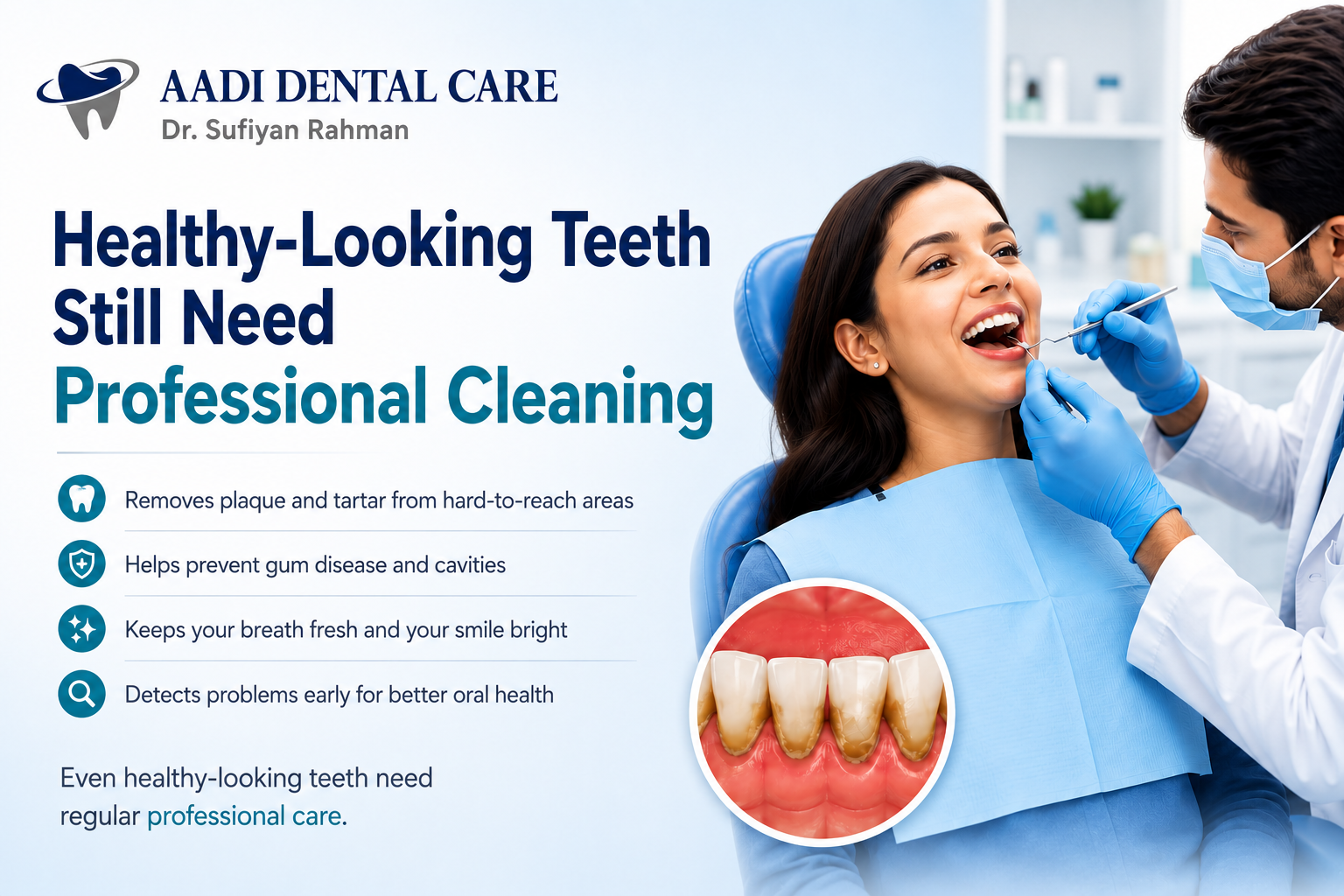
Why Healthy-Looking Teeth Still Need Professional Dental Cleaning
Your teeth may look white and clean, but plaque and tartar can still hide between the teeth and near the gums.
Brushing every day is important, but it cannot always remove hardened tartar. This is why professional dental cleaning is needed even when there is no tooth pain.
What Is Professional Dental Cleaning?
Professional dental cleaning removes:
Plaque
Tartar
Trapped food
Some surface stains
Bacteria near the gums
Plaque is a soft, sticky layer that forms on the teeth. If it is not removed, it becomes hard tartar.
Once tartar forms, a toothbrush cannot remove it. A dentist must remove it safely through dental scaling.
Signs You May Need Dental Cleaning
You may need teeth cleaning if you notice:
Bleeding gums
Bad breath
Red or swollen gums
Yellow deposits near the gums
Rough teeth
Food stuck between teeth
Mild sensitivity
Tea or coffee stains
Sometimes, there may be no clear warning signs. That is why regular dental check-ups are important.
Why Healthy-Looking Teeth Can Still Have Problems
Plaque often collects in hidden areas such as:
Behind the lower front teeth
Between crowded teeth
Around back teeth
Near the gumline
Around braces, crowns, or bridges
These areas are difficult to clean properly at home.
If plaque and tartar are ignored, they may cause gum swelling, bleeding, bad breath, cavities, gum recession, and loose teeth.
Early professional dental cleaning can help prevent small problems from becoming serious.
What Happens During Dental Cleaning?
The dentist first checks your teeth and gums.
Then the dentist removes plaque and tartar using special instruments. This process is called dental scaling.
After scaling, the teeth may be polished to make the surface smooth and remove some stains.
The dentist may also explain how to brush, floss, and clean difficult areas more effectively.
Routine dental cleaning is usually simple and comfortable. Some people may feel mild pressure or temporary sensitivity.
Who May Need More Regular Cleaning?
Professional teeth cleaning may be especially important for:
Children who miss areas while brushing
Teenagers with braces
Working professionals who drink tea or coffee often
Pregnant women with sensitive gums
Older adults
People with diabetes
Smokers and tobacco users
People with crowded teeth
People with crowns, bridges, or dentures
The right cleaning schedule is different for every patient.
Simple Patient Story
A 35-year-old office employee visited a dentist because his gums sometimes bled while brushing.
His teeth looked white, and he had no pain, so he believed everything was fine.
During the check-up, the dentist found tartar behind his lower front teeth and near the back teeth. His gums were mildly swollen.
The dentist completed professional dental cleaning and showed him how to clean near the gumline and between the teeth.
Within a few days, the bleeding reduced and his mouth felt fresher.
This fictional case shows that healthy-looking teeth can still have hidden plaque and early gum problems.
How to Prevent Plaque and Tartar
Follow these simple habits:
Brush twice a day
Use a soft toothbrush
Clean between the teeth daily
Clean your tongue
Drink enough water
Reduce sugary snacks
Avoid smoking and tobacco
Replace your toothbrush regularly
Attend regular dental check-ups
Do not try to remove tartar at home using sharp objects. This can damage the teeth and gums.
Common Myths and Facts
| Myth | Fact |
|---|---|
| White teeth are always healthy. | White teeth can still have hidden plaque or gum problems. |
| Brushing harder removes tartar. | Hard brushing cannot remove tartar. |
| Scaling makes teeth loose. | Scaling removes harmful deposits around the teeth. |
| Mouthwash removes tartar. | Mouthwash cannot remove hardened tartar. |
| Cleaning is needed only when there is pain. | Many gum problems begin without pain. |
Frequently Asked Questions
Do I need cleaning if I brush daily?
Yes, you may still need it because brushing cannot remove hardened tartar.
Will cleaning whiten my teeth?
It may remove some surface stains, but it is not the same as teeth whitening.
Is dental scaling painful?
Most patients feel only mild pressure or vibration.
Why do gums bleed?
Bleeding may happen because of plaque buildup or gum inflammation.
Can children get dental cleaning?
Yes, if the dentist finds plaque, tartar, or poor brushing areas.
How often should I get cleaning?
It depends on your gum health, tartar buildup, habits, and medical condition.
When Should You Visit a Dentist?
Book a dental check-up if you notice:
Bleeding gums
Swollen gums
Bad breath
Visible tartar
Tooth sensitivity
Loose teeth
Gum recession
Pain while chewing
Do not wait for severe pain.
Professional dental cleaning helps protect your teeth, gums, and smile. It also allows the dentist to find early problems before they become more serious.
At Aadi Dental Care, patients receive clear explanations, gentle care, and treatment based on their individual dental needs.
Book a consultation to understand whether professional dental cleaning is right for you.